How an Unfinished Basement Can Become a Comfortable Living Space
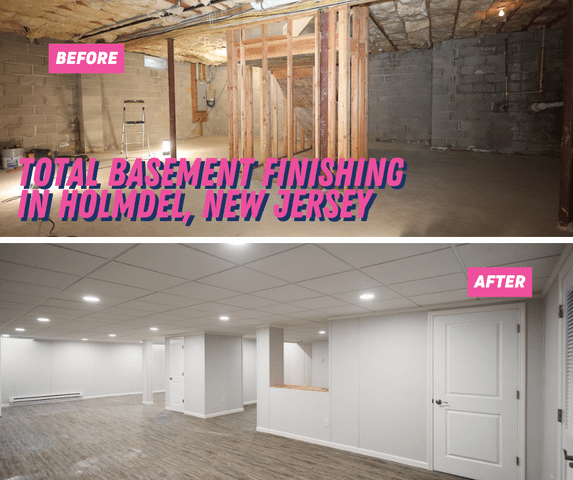
An unfinished basement can offer a tremendous amount of potential, but turning that empty space into a comfortable part of the home requires more than simply covering the walls and installing flooring. Basements have unique conditions because they are located below ground level, which means moisture, humidity, foundation walls, and temperature can all play a role in how the finished space performs. A recent Total Basement Finishing project in Holmdel, NJ provides an example of how an unfinished basement can be transformed into a functional and comfortable extension of the home.
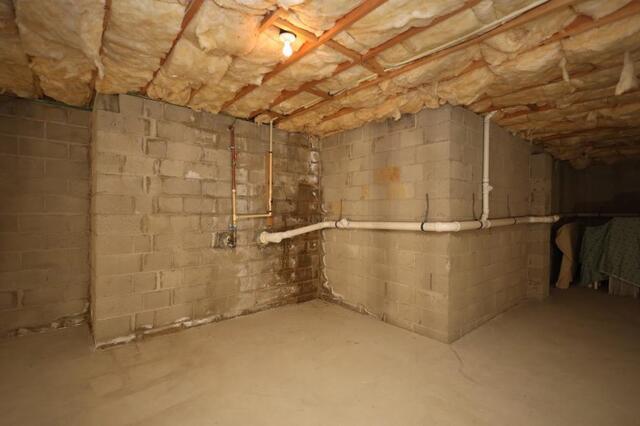
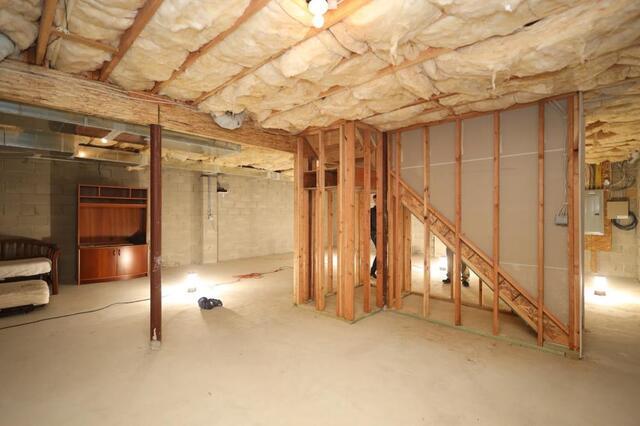
The project began with a completely unfinished basement that had block foundation walls, exposed insulation between the ceiling joists, and unfinished flooring. The space was essentially a blank slate, which gave the homeowners the opportunity to design the basement around how they wanted to use it. Their goals included creating an open finished area and adding a bathroom, giving the basement more practical value and allowing it to function as additional living space. Before finishing a basement, it is important to understand the existing conditions. During this project, our team noticed an area where a previous leak had occurred. Moisture is an important consideration in any basement finishing project because water and excessive humidity can affect the comfort and longevity of finished materials. Identifying these concerns before completing the space allows the finishing plan to account for the basement environment instead of simply hiding potential problems behind finished walls.
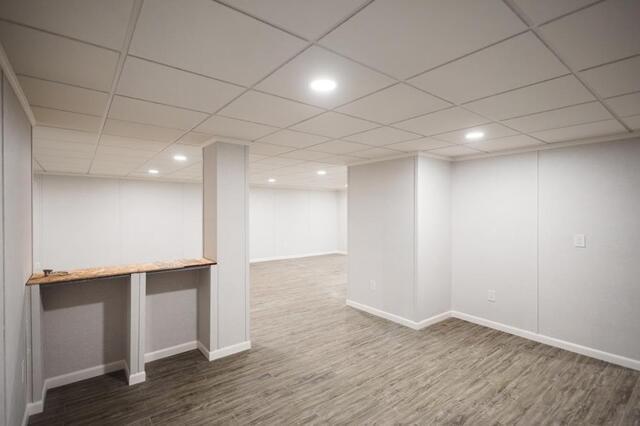
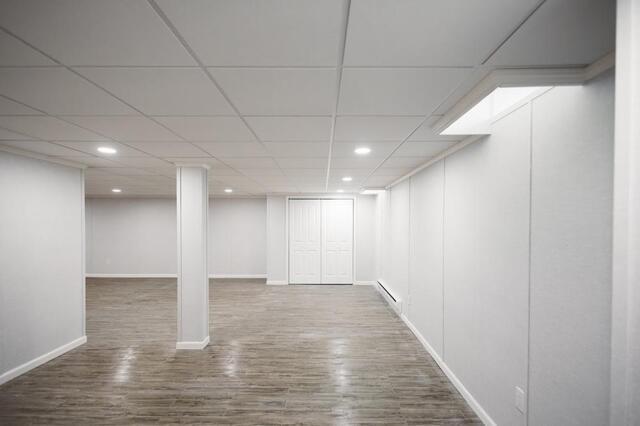
Once the space had been evaluated, the finishing process could begin. The walls were finished using the EverLast Wall System. Traditional basement finishing can involve materials that are vulnerable to the damp conditions commonly found below ground, so selecting materials designed specifically for basement environments can be an important part of the project. The EverLast Wall System provided the basement with a finished appearance while helping create a more comfortable and polished living area. The ceiling was also transformed. Instead of leaving the insulation and ceiling joists exposed, our team installed a new finished ceiling and lighting. Proper lighting can make a significant difference in how a basement feels because below-grade spaces often receive less natural light than rooms on the upper levels of a home. A finished ceiling and well-planned lighting helped give the space a more complete appearance.
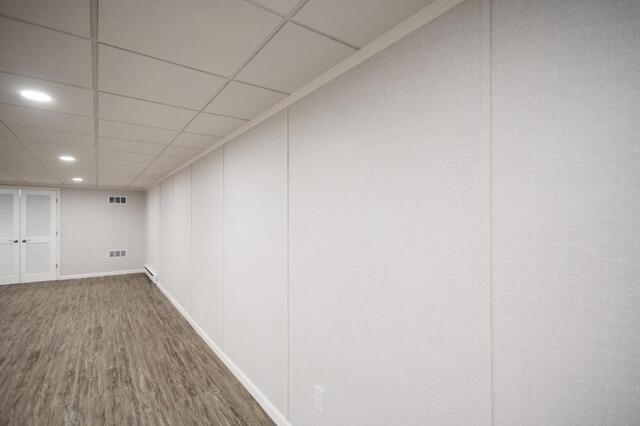
Flooring was another major part of the transformation. ThermalDry Elite Plank Flooring was installed throughout the finished area, giving the basement the appearance of a traditional finished floor while using flooring designed with basement conditions in mind. Choosing appropriate materials is especially important in a basement because moisture and humidity can create challenges for flooring products that are not designed for below-grade environments. Humidity control was also incorporated into the project with the installation of a SaniDry Sedona dehumidifier. Basement humidity can contribute to an uncomfortable environment and can create conditions that are favorable for mold and musty odors. A dedicated dehumidifier helps control excess moisture in the air and can contribute to a more comfortable finished basement.
The homeowners also wanted to make the basement more useful by adding a bathroom. Adding a bathroom can make a finished basement much more convenient, especially when the space is being used as an entertainment area, guest area, recreation space, or another type of living space. The new bathroom became an important part of the overall layout while the remaining finished area was kept open and flexible.
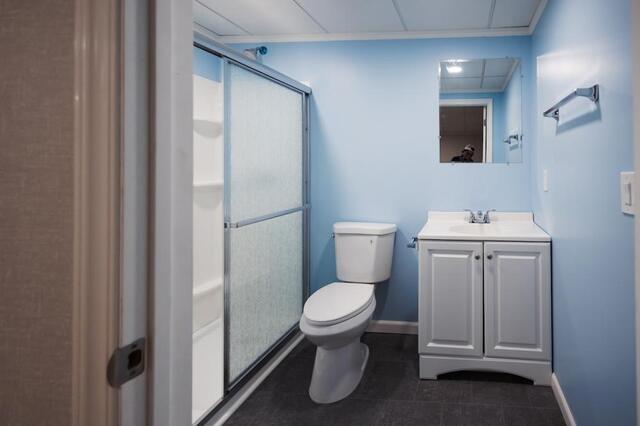
The final result was a complete transformation from an unfinished basement into a finished living area. What began as block walls, exposed ceiling insulation, and unfinished flooring became a polished space with finished walls, a finished ceiling, new lighting, durable basement flooring, humidity control, and a bathroom. The project demonstrates why basement finishing should be approached as more than a cosmetic renovation. Considering moisture, humidity, materials, lighting, layout, and functionality together can help create a basement that is not only attractive but also comfortable and practical for everyday use.