

Snowmelt and Your Home: What to Watch For
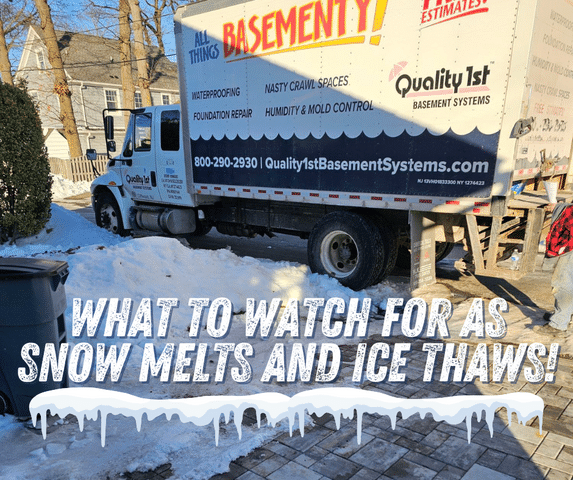
As temperatures begin to rise above freezing after the recent winter storm, many homeowners look forward to the snow finally melting away. However, snowmelt can bring hidden risks for your home, especially when it comes to basements, crawl spaces, and foundations. While snow may seem harmless, the water it produces during thawing can quickly become a major source of moisture problems if your home is not properly protected.
Why Snowmelt Causes Water Problems
Snowmelt behaves differently than regular rainfall. When large amounts of snow melt all at once, the surrounding soil can become oversaturated. However, now the ground is still frozen or compacted, which prevents water from absorbing properly into the soil. Instead, the water collects around your foundation, increasing hydrostatic pressure that pushes moisture against basement walls and floors. This pressure forces water through small cracks, porous concrete, window wells, and the joint where the wall meets the floor. Even homes that do not normally experience leaks can suddenly see water intrusion during snowmelt season.
Warning Signs to Look Out For
Snowmelt-related issues often start subtly. Homeowners should watch for damp or darkened spots on basement walls, water pooling on the floor, musty odors, visible mold growth, or peeling paint and efflorescence. In crawl spaces, standing water, sagging insulation, and excessive humidity are common red flags. Another major warning sign is a sump pump that runs constantly or struggles to keep up. This usually means groundwater levels are extremely high and your drainage system may be under stress.
How Snowmelt Can Impact Your Home
Excess moisture does more than just create puddles. Over time, water intrusion can lead to mold growth, wood rot, poor indoor air quality, and even structural damage. Foundation cracks can widen, concrete can deteriorate, and persistent humidity can affect the comfort and health of everyone living in the home. Because air moves upward, moisture problems in basements and crawl spaces often impact upper floors, leading to cold floors, allergy symptoms, and higher energy bills.
How to Prepare for Snowmelt Season
The best way to protect your home is to address water issues before they escalate. Interior drainage systems, like our WaterGuard, help collect groundwater at the perimeter of your basement and direct it safely away. Sump pump systems remove water before it can build pressure. Crawl space encapsulation prevents moisture from entering the home and improves air quality. Proper exterior drainage, including functioning gutters and downspouts, also plays a critical role.
When to Call a Professional
If you notice persistent dampness, water seepage, or musty odors during or after snowmelt, it is important to take action quickly. These issues rarely resolve on their own and usually become more expensive over time. At Quality 1st Basement Systems, our experts specialize in identifying the source of water problems and designing permanent solutions to keep your home dry, healthy, and protected year-round. If snowmelt is causing concerns in your basement or crawl space, now is the perfect time to schedule a free estimate appointment and stay ahead of spring moisture problems.