

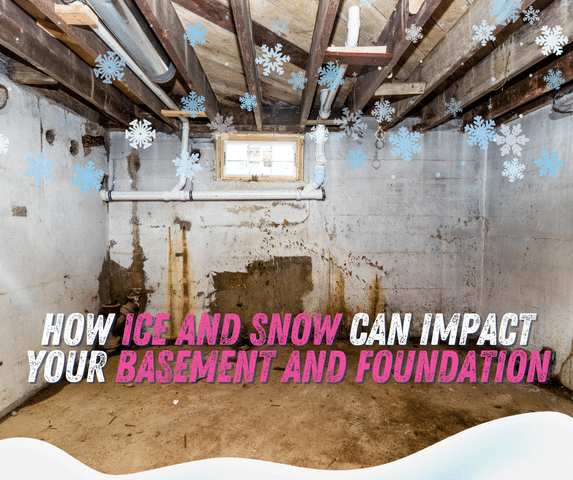
After the Snowstorm: How Ice and Snow Can Impact Your Basement and Foundation
The recent snowstorm brought heavy snowfall, freezing temperatures, and significant ice buildup across our area. While the immediate focus is often on cleared driveways and icy roads, many homeowners don’t realize that snow and ice can create serious risks for basements and foundations days or even weeks after a storm passes. Understanding what happens beneath the surface after extreme winter weather can help you prevent water damage, foundation problems, and unexpected flooding.
Why Snow and Ice Can Lead to Basement Water Problems
When snow accumulates around your home, it acts like a temporary dam. As temperatures fluctuate, melting snow has limited places to go, especially if the ground is frozen. Instead of soaking into the soil, water from melted snow and ice is often forced toward your foundation.
Once that water reaches your home, it can enter through:
-
The wall and floor joints
-
Foundation cracks
-
Window wells
-
Porous concrete or block walls
Even if your basement stayed dry during the storm, problems often appear after the snow begins to melt.
The Freeze-Thaw Cycle and Foundation Stress
Extreme winter weather creates repeated freeze-thaw cycles. When soil around your foundation freezes, it expands. As it thaws, it contracts. This constant movement places pressure on foundation walls and can contribute to:
-
Horizontal or stair-step wall cracks
-
Bowing or leaning foundation walls
-
Widening of existing cracks
Over time, these changes can allow more water to enter and may lead to structural concerns if left unaddressed.
Why Sump Pumps and Discharge Lines Matter in Winter
During heavy snowmelt, sump pumps often work overtime. However, winter introduces a unique risk: frozen discharge lines. If the line that carries water away from your home freezes, water can back up into the basement even if the pump itself is functioning. This is why winter-specific protection, such as discharge line safeguards and routine system checks, is critical during icy conditions.
Signs to Watch for After a Winter Storm
Following a major snow or ice event, homeowners should keep an eye out for:
-
Damp spots or water along basement walls
-
Musty odors or increased humidity
-
New or worsening foundation cracks
-
Standing water near the sump pump
-
Ice buildup at the discharge line outlet
These warning signs often indicate that melting snow is affecting your foundation or drainage system.
Peace of Mind After the Storm
Extreme winter weather is unavoidable, but basement water damage does not have to be. Snow, ice, and freezing temperatures place unique stress on your home, and the effects often appear after the storm has passed. At Quality 1st Basement Systems, we help homeowners prepare for winter conditions and recover after major storms with proven waterproofing, foundation repair, and moisture control solutions. If you’ve noticed changes in your basement following the recent storm, now is the time to address them before spring thaw brings even more water.
Schedule a FREE ESTIMATE today to ensure your basement stays dry, safe, and protected all winter long.